
作者:戏公
来源:原创
时间:2026-08-27
阅读:127 次
今日头条
新疆五方面做好防控资源储备工作 完善集中隔离点房间储备_检测_疫情_我的网站

一 |
原标题:新疆五方面做好防控资源储备工作 完善集中隔离点房间储备13日晚,新疆举行疫情防控新闻发布会。会上,刘建国介绍了新疆做好防控资源储备工作的情况。 苟继鹏 摄中新网乌鲁木齐9月13日电 (苟继鹏)13日晚,新疆举行疫情防控新闻发布会。会上,新疆维吾尔自治区人民政府副秘书长刘建国介绍了新疆防控资源储备工作情况。 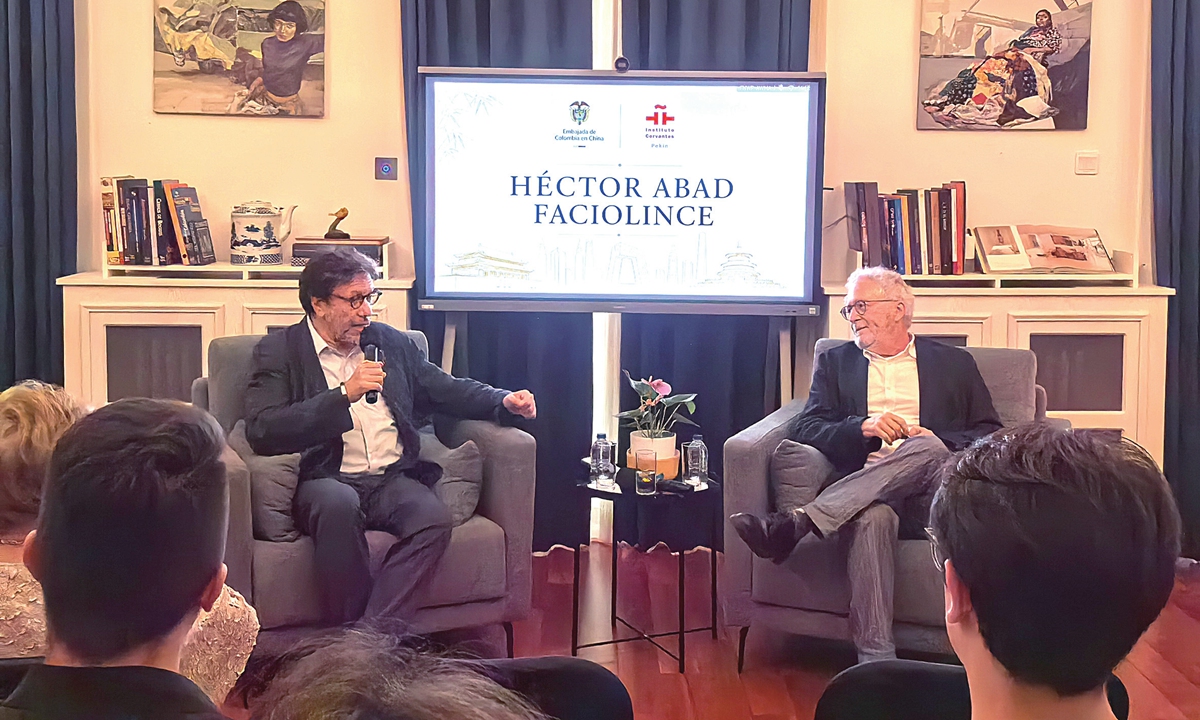
The Embassy of the Republic of Colombia in China hosted a colloquium with Héctor Abad Faciolince, a Colombian novelist, writer and journalist. The writer shared on Tuesday his growth journey from a journalist to achieve his dream as a writer, his observation of the Colombian society and his impression about the changes in China.
In a fully packed hall, Minister Plenipotentiary Jose Fernando Bermúdez Cendales said in his opening remarks that the event is part of an initiative to bring Colombian culture closer to the Chinese public while simultaneously creating new spaces for dialogue and exchange between the two countries.
Bermúdez said that Abad's visit to China offers a particularly valuable opportunity to showcase the richness of our literature and to strengthen the cultural and human bridges connecting Colombia and China.
The session, chaired by Santiago Gamboa, writer and minister counselor of the Colombian Embassy, focused on the career and body of work of Abad and in particular, El olvido que seremos (Oblivion: A Memoir).
Abad's book is a seminal work of contemporary Colombian literature in which personal and family memory engage deeply with Colombia's recent history. Its translation into Chinese allows this story to reach new readers and represents an extraordinary opportunity to bring both societies closer together through literature, per some commentators.
"We hope this gathering will be an open conversation among cultures, readers, and experiences, and a new expression of the friendship that Colombia and China continue to build," said Bermúdez.
Abad, one of the most important voices in contemporary Latin American literature, shared with the Global Times that this is his second trip in China. The last time he visited the country was two decades ago.
This time, in his eyes, China has changed a lot. In many ways, the country stands for the future of the world.
Abad said he is surprised to see how much Chinese people are depending on the electric devices and network to communicate in a virtual world, and said that he felt "like an alien."
Talking about his interaction with readers in Shanghai, Abad smiled, saying that the readers selected some phrases from his book and asked him to write down as part of the autography and signature for them.
In his book, El Olvido Que Seremos (The Oblivion We Will Be), which is acclaimed as a "love letter from a son to his father," is not only a deeply affectionate look back at familial bonds but also a courageous attempt to defy oblivion.
Rooted in true events, The Oblivion We Will Be chronicles the life of his own father. Abad noted that his father was killed in August 1987 - nearly forty years ago.
In the Western literary tradition, a father is often portrayed as a distant or even negative figure. His father, however, was "totally different - a man of love and deep sense of responsibility in both the public sphere and his family life."
Such image of a benevolent, non-authoritarian father has impressed his Chinese readers as well, he said.
As a physician, Abad's father dedicated his life to addressing fundamental issues affecting people's well-being, such as drinking water quality and public health, steadfast in the belief that the world could be made better through action.
Abad's work addresses themes such as memory, violence, inequality, and the human condition, deeply marked by the murder of his father, an event that inspired his most iconic book, The Oblivion We Will Be was published in Chinese by Writer's Publishing House in Beijing in July.
。他说,按照国务院联防联控机制印发的相关方案和国家第九版防控方案,新疆制定了具体落实方案,要求各地做好流调溯源、核酸检测、定点医院、方舱医院和集中隔离点等准备工作。据刘建国介绍,一是补齐核酸检测能力短板。由自治区统筹,加强移动检测车、气膜方舱实验室、基因测序仪配置。多措并举,快速提高检测能力,确保疫情发生后24小时内完成划定范围的区域核酸检测任务。二是做好定点医疗机构建设准备工作。
。The Embassy of the Republic of Colombia in China hosted a colloquium with Héctor Abad Faciolince, a Colombian novelist, writer and journalist. The writer shared on Tuesday his growth journey from a journalist to achieve his dream as a writer, his observation of the Colombian society and his impression about the changes in China.
In a fully packed hall, Minister Plenipotentiary Jose Fernando Bermúdez Cendales said in his opening remarks that the event is part of an initiative to bring Colombian culture closer to the Chinese public while simultaneously creating new spaces for dialogue and exchange between the two countries.
Bermúdez said that Abad's visit to China offers a particularly valuable opportunity to showcase the richness of our literature and to strengthen the cultural and human bridges connecting Colombia and China.
The session, chaired by Santiago Gamboa, writer and minister counselor of the Colombian Embassy, focused on the career and body of work of Abad and in particular, El olvido que seremos (Oblivion: A Memoir).
Abad's book is a seminal work of contemporary Colombian literature in which personal and family memory engage deeply with Colombia's recent history. Its translation into Chinese allows this story to reach new readers and represents an extraordinary opportunity to bring both societies closer together through literature, per some commentators.
"We hope this gathering will be an open conversation among cultures, readers, and experiences, and a new expression of the friendship that Colombia and China continue to build," said Bermúdez.
Abad, one of the most important voices in contemporary Latin American literature, shared with the Global Times that this is his second trip in China. The last time he visited the country was two decades ago.
This time, in his eyes, China has changed a lot. In many ways, the country stands for the future of the world.
Abad said he is surprised to see how much Chinese people are depending on the electric devices and network to communicate in a virtual world, and said that he felt "like an alien."
Talking about his interaction with readers in Shanghai, Abad smiled, saying that the readers selected some phrases from his book and asked him to write down as part of the autography and signature for them.
In his book, El Olvido Que Seremos (The Oblivion We Will Be), which is acclaimed as a "love letter from a son to his father," is not only a deeply affectionate look back at familial bonds but also a courageous attempt to defy oblivion.
Rooted in true events, The Oblivion We Will Be chronicles the life of his own father. Abad noted that his father was killed in August 1987 - nearly forty years ago.
In the Western literary tradition, a father is often portrayed as a distant or even negative figure. His father, however, was "totally different - a man of love and deep sense of responsibility in both the public sphere and his family life."
Such image of a benevolent, non-authoritarian father has impressed his Chinese readers as well, he said.
As a physician, Abad's father dedicated his life to addressing fundamental issues affecting people's well-being, such as drinking water quality and public health, steadfast in the belief that the world could be made better through action.
Abad's work addresses themes such as memory, violence, inequality, and the human condition, deeply marked by the murder of his father, an event that inspired his most iconic book, The Oblivion We Will Be was published in Chinese by Writer's Publishing House in Beijing in July.
。他说,按照国务院联防联控机制印发的相关方案和国家第九版防控方案,新疆制定了具体落实方案,要求各地做好流调溯源、核酸检测、定点医院、方舱医院和集中隔离点等准备工作。据刘建国介绍,一是补齐核酸检测能力短板。由自治区统筹,加强移动检测车、气膜方舱实验室、基因测序仪配置。多措并举,快速提高检测能力,确保疫情发生后24小时内完成划定范围的区域核酸检测任务。二是做好定点医疗机构建设准备工作。

二 | 加强定点医院、亚(准)定点医院、方舱医院建设,规范设置,配足配齐防护物资,确保必要时可紧急投入使用。

三 | 三是加强三级流调队伍建设。各地(州、市)要配足配齐流调队伍,以县(市、区)为单位储备不少于50人的流调队伍,以地(州、市)为单位统筹储备不少于200人的增援流调队伍;自治区统筹储备不少500人的支援流调队伍。四是完善集中隔离点房间储备。要按照与境外通关的陆路口岸城市和公路入疆通道100间/万人;地、州、市所在城市、人口较多、流量较大、旅游热点的县市80间/万人,且不少于1000间;其他县市60间/万人,且不少于300间的标准进行储备。五是细化隔离转运车辆储备调度方案。每个县(市、区)原则上确定10辆大巴车,可根据当地人口数量和疫情防控实际需要酌情增加或减少,每车配备2-3名司机,纳入转运工作人员名单并做好培训演练,确保及时上岗。(完)返回搜狐,查看更多责任编辑:
Current article:http://m1u.cibianpangjujiusu.cyou/list_md8/fo59xi.html
Published on:00:00:00


